
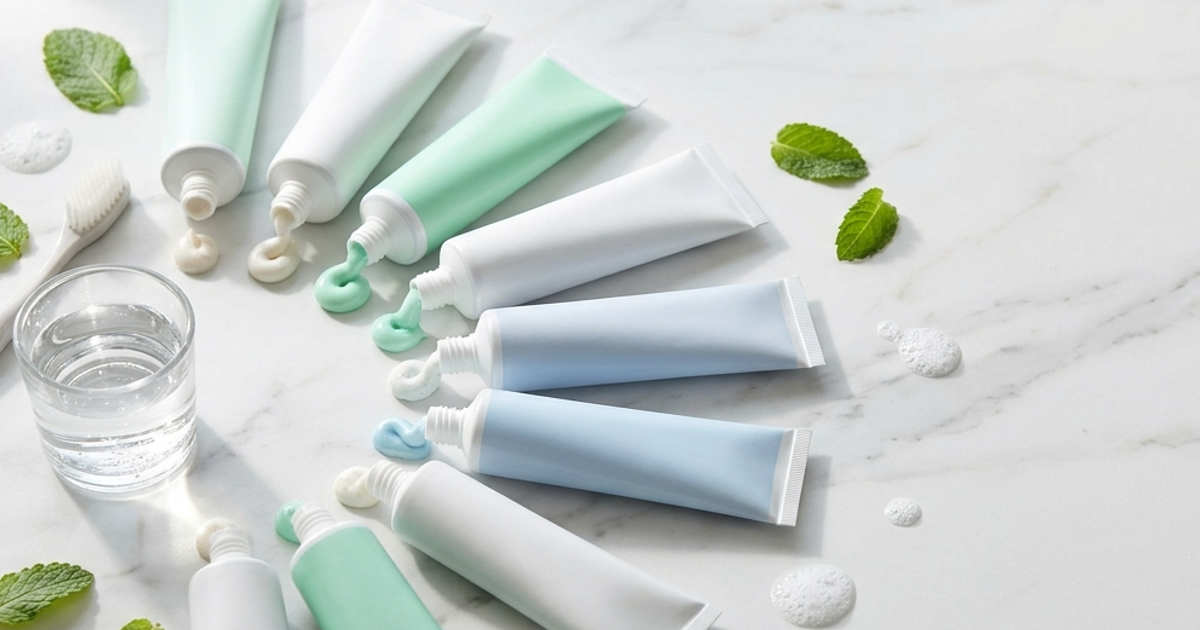

Walk down any pharmacy aisle in Southwest Florida and you will quickly find yourself staring at dozens of toothpaste options. Whitening formulas, sensitivity relief, enamel strengthening, natural ingredients, charcoal, fluoride-free — the choices can feel overwhelming. With so many products competing for your attention, how do you know which one is actually right for your mouth? At 1 OAK Dentistry, we believe that an informed patient is an empowered patient. Understanding what toothpaste labels actually mean can help you make smarter decisions for your long-term oral health.
What Toothpaste Actually Does
Before diving into the different types, it helps to understand what toothpaste is designed to do. Toothpaste works alongside your toothbrush to remove plaque, food debris, and surface stains from the teeth. It also delivers active ingredients — like fluoride, desensitizing agents, or antibacterial compounds — directly to the surfaces of your teeth and gums.
It is important to note that the mechanical action of brushing does most of the heavy lifting. Toothpaste enhances that action and provides therapeutic benefits, but using an excellent toothpaste with poor brushing technique will not protect your smile the way it should. That said, choosing the right toothpaste for your specific needs can make a meaningful difference in your oral health outcomes over time.
The Role of Fluoride
Fluoride remains the single most important and evidence-backed ingredient in toothpaste for cavity prevention. It works by strengthening the outer enamel layer of your teeth, making them more resistant to acid attacks from bacteria and sugary foods. It can also assist in remineralizing areas of early tooth decay before they progress into full cavities.
Most dentists, including our team at 1 OAK Dentistry, recommend using a fluoride-containing toothpaste for adults and children over the age of two. Despite the popularity of fluoride-free natural toothpastes, no alternative ingredient has demonstrated the same level of protection in peer-reviewed research. If you are considering a fluoride-free option, we encourage you to speak with Dr. Marc or Dr. Hernandez first so you can weigh the pros and cons based on your personal risk for tooth decay.
Decoding the Different Types of Toothpaste
Once you understand the basics, navigating the toothpaste aisle becomes much more manageable. Here is a breakdown of the most common categories and what they are designed to do.
Whitening Toothpastes
Whitening toothpastes are among the most popular options on the market. They typically work in one of two ways: through mild abrasives that polish away surface stains, or through low concentrations of hydrogen peroxide or other bleaching agents. The results from whitening toothpastes are generally subtle and limited to surface-level stains caused by coffee, tea, or wine.
If you are looking for a noticeably brighter smile, professional whitening treatments performed or supervised by a dental provider will deliver far more dramatic and lasting results. Whitening toothpastes can be a helpful maintenance tool after a professional treatment, but they should not be relied upon as a standalone solution for significant discoloration.
Sensitivity Toothpastes
If you experience sharp, brief pain when eating cold foods, drinking hot beverages, or consuming acidic items, you may benefit from a toothpaste formulated for sensitivity. These products typically contain either potassium nitrate or stannous fluoride, both of which help calm the nerve signals inside the tooth or seal exposed dentinal tubules that allow temperature changes to reach the nerve.
Sensitivity toothpastes can provide real relief for many patients, but it is important to understand that tooth sensitivity can be a symptom of an underlying issue — such as enamel erosion, gum recession, a cracked tooth, or early decay. Using a sensitivity toothpaste without addressing the root cause may mask a problem that requires professional attention. If your sensitivity is persistent or worsening, please schedule an evaluation with our team.
Enamel-Strengthening Toothpastes
These formulas often contain higher concentrations of fluoride, hydroxyapatite, or other remineralizing agents designed to rebuild weakened enamel. Hydroxyapatite, a naturally occurring mineral that makes up a large portion of tooth enamel, has gained attention in recent years as a promising fluoride-free alternative for remineralization. Early research is encouraging, though fluoride still holds the strongest body of evidence for enamel protection.
Natural and Organic Toothpastes
Many patients are drawn to toothpastes made with plant-based ingredients, essential oils, or without synthetic additives. While there is nothing inherently wrong with choosing a natural product, it is essential to check whether it contains fluoride and whether it has received the American Dental Association seal of acceptance. Some natural toothpastes use highly abrasive ingredients like activated charcoal, which can actually wear down enamel over time rather than protect it.
Prescription-Strength Toothpastes
For patients with a higher risk of tooth decay, severe sensitivity, or conditions like dry mouth, we may recommend a prescription-strength fluoride toothpaste. These products contain significantly higher levels of fluoride than over-the-counter options and are used under professional guidance to provide added protection where it is most needed.
What to Look for When Choosing Your Toothpaste
With so many options available, here are the most important factors to consider when selecting a toothpaste that will genuinely support your oral health.
- ADA Seal of Acceptance: This seal indicates the product has been tested for safety and effectiveness by an independent scientific body. It is one of the most reliable indicators that a toothpaste will do what it claims.
- Fluoride content: Look for sodium fluoride or stannous fluoride in the active ingredients. Most adults benefit from a concentration of 1000 to 1500 ppm (parts per million) of fluoride.
- Targeted benefits: Choose a formula that addresses your specific oral health concerns, whether that is sensitivity, whitening, gum health, or enamel strength.
- Abrasivity level: Toothpastes are rated on a scale called RDA (Relative Dentin Abrasivity). For daily use, look for products with a lower to moderate RDA to avoid wearing down enamel or exposed root surfaces over time.
- Age-appropriate formulas: Children under two years old should use a fluoride-free toothpaste, and children two to six should use only a pea-sized amount of fluoride toothpaste. Always supervise young children to ensure they spit rather than swallow.
A Personalized Recommendation Is Always the Best Approach
The truth is that no single toothpaste is the perfect choice for every person. Your ideal toothpaste depends on your age, cavity risk, enamel condition, gum health, sensitivity levels, and personal preferences. What works beautifully for one patient may not be the best fit for another.
At 1 OAK Dentistry, Dr. Marc Dadkhah and our clinical team take the time to understand your unique oral health profile during each visit. We are happy to review the products you are currently using and make specific recommendations tailored to your needs. Whether you are managing sensitivity, trying to maintain a bright smile, or simply looking for the most effective daily protection, we can point you in the right direction.
The best toothpaste is ultimately the one you will use consistently, twice a day, with proper brushing technique. Combine that with regular professional cleanings and checkups, and you have a foundation for a lifetime of healthy, beautiful smiles. If you have questions about your oral care routine or would like to schedule an appointment, we invite you to contact our team at 1 OAK Dentistry in Southwest Florida. We are here to help you smile with confidence.

