
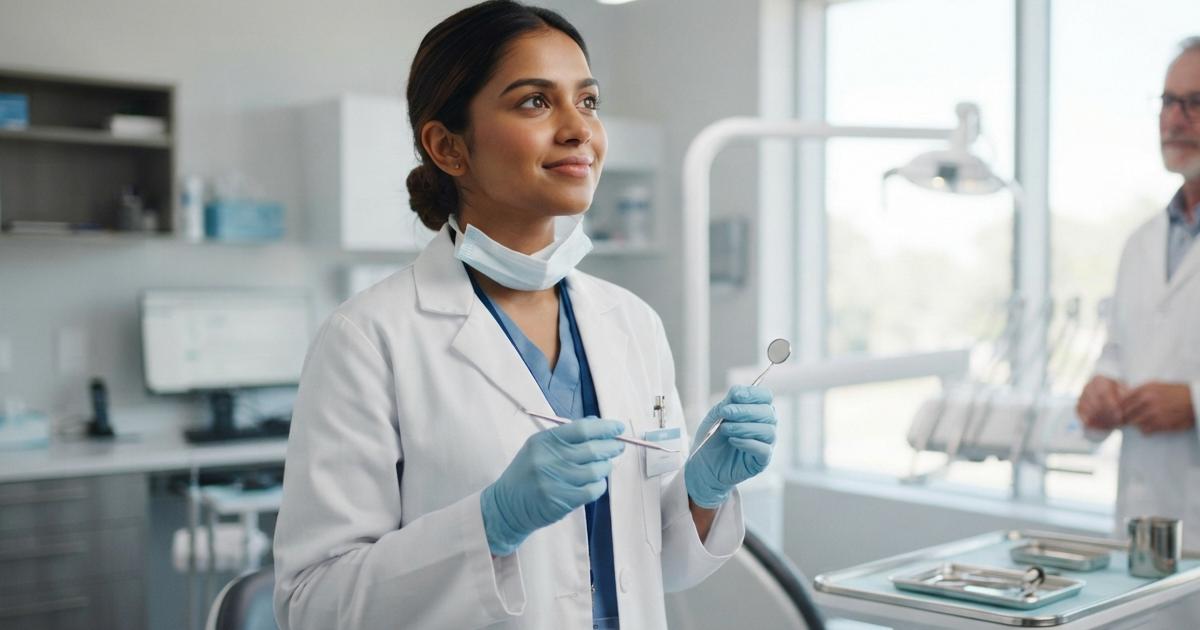

When you sit down in the dental chair, you are placing your trust in the hands of someone who has spent years preparing for that moment. But beyond dental school, there is a level of advanced clinical training that separates a good dentist from a truly exceptional one. A general practice residency, often abbreviated as GPR, is a postgraduate program that gives dentists the opportunity to refine their skills, expand their clinical experience, and develop the kind of judgment that only comes from working in high-pressure, real-world environments. At 1 OAK Dentistry, this commitment to advanced training is at the heart of everything Dr. Marc Dadkhah and his team bring to every patient in Southwest Florida.
What Is a General Practice Residency?
A general practice residency is a one-year, hospital-based postgraduate training program that dentists can pursue after completing their dental degree. Unlike dental school, which provides foundational knowledge across all areas of dentistry, a GPR places newly graduated dentists in a clinical setting where they treat complex, medically compromised, and high-need patients under close supervision.
GPR programs are typically affiliated with major hospitals and medical centers, meaning residents work alongside physicians, surgeons, and other healthcare professionals. This interdisciplinary environment teaches dentists not just how to treat teeth, but how to treat whole patients — people with heart conditions, diabetes, bleeding disorders, compromised immune systems, and a wide range of medical complexities that can directly affect dental treatment planning and outcomes.
Where Dr. Marc Trained
Dr. Marc Dadkhah completed his general practice residency at Albert Einstein Medical Center in Philadelphia, one of the most respected hospital-based programs in the country. Training at a major academic medical center of this caliber means exposure to a wide variety and volume of patients, working in operating rooms, emergency settings, and outpatient clinics, and developing the ability to make sound clinical decisions quickly and confidently. This experience directly translates into the quality of care his patients in Southwest Florida receive today.
What Residents Learn That Dental School Cannot Fully Teach
Dental school equips graduates with the essential tools of their profession, but the depth and pace of a GPR program accelerates learning in ways that simply cannot be replicated in a classroom or simulated clinical environment. Here is what a general practice residency adds to a dentist's preparation:
- Hospital dentistry and IV sedation: Residents learn to treat patients in operating room settings and are trained in advanced sedation techniques, including intravenous sedation, for patients who cannot tolerate treatment while awake.
- Medical-dental integration: Residents work closely with physicians and nurses to understand how systemic diseases affect oral health and how dental procedures must be modified for medically compromised patients.
- Complex oral surgery: From difficult extractions to surgical procedures that would typically be referred out, GPR training expands a dentist's surgical capabilities significantly.
- Emergency management: Residents are trained to respond to medical emergencies that can occur in a dental setting, including allergic reactions, cardiac events, and respiratory distress.
- Interdisciplinary collaboration: Working within a hospital system means learning to communicate and coordinate with specialists across medicine and dentistry, developing a collaborative mindset that benefits patients throughout their care.
- High-volume clinical exposure: The sheer number and variety of patients treated during a residency year accelerates clinical skill development far beyond what dental school offers.
The Difference It Makes in Private Practice
When a dentist with GPR training opens or joins a private practice, they bring a depth of clinical confidence and medical awareness that shapes every interaction with patients. They are more likely to identify when a patient's oral symptoms are connected to a systemic condition. They are better equipped to handle dental emergencies calmly and effectively. And they are more skilled at performing complex procedures that might otherwise require referral to a specialist, saving patients time, money, and the anxiety of navigating multiple providers.
Why This Level of Training Matters for You as a Patient
Choosing a dentist is one of the most personal healthcare decisions you will make. You want someone who not only has the technical skills to restore your smile but also the clinical wisdom to see you as a whole person with a unique medical history, specific needs, and long-term goals.
At 1 OAK Dentistry, Dr. Marc's hospital-based residency training at Albert Einstein Medical Center means he approaches every patient with a level of medical literacy that goes beyond the average dental office. Whether you are managing a chronic health condition, need a complex restorative procedure, or are simply looking for a dentist who will pay careful attention to the details of your overall health, this background matters.
Published Research and Ongoing Learning
Dr. Marc has also published over 20 scientific papers, a distinction that reflects not only academic rigor but an ongoing commitment to staying at the forefront of dental science. In a field that evolves rapidly, a dentist who has engaged deeply with research brings an evidence-based perspective to clinical decision making. When Dr. Marc recommends a treatment, that recommendation is grounded in the latest evidence, not habit or convenience.
Specialist-Level Expertise Within the Same Practice
At 1 OAK Dentistry, patients also benefit from the expertise of Dr. Andrea Hernandez, a board-eligible endodontist who completed her specialty residency at the University of Texas Health Science Center and has received multiple research awards. Having an endodontist in-house means that patients who need root canal therapy or complex internal tooth treatment can receive specialist-level care without leaving the practice they trust. This combination of a GPR-trained general dentist and a credentialed endodontist is rare in a private practice setting and reflects the exceptional standard of care 1 OAK Dentistry is committed to providing.
The Takeaway: Training Defines the Care You Receive
Not all dental degrees are created equal, and the path a dentist takes after graduation says a great deal about the level of care they are prepared to deliver. A general practice residency is a rigorous, demanding, and transformative training experience that shapes how a dentist thinks, acts, and cares for patients for the rest of their career.
When you choose 1 OAK Dentistry in Southwest Florida, you are choosing a practice built on that foundation of advanced training, academic achievement, and a genuine commitment to excellence. From routine cleanings to complex restorations, every aspect of your care is delivered with the depth of knowledge and clinical skill that only comes from truly exceptional preparation.
If you are ready to experience the difference that advanced training makes, we invite you to schedule a visit with Dr. Marc and the team at 1 OAK Dentistry. Your smile deserves nothing less than the best.

