
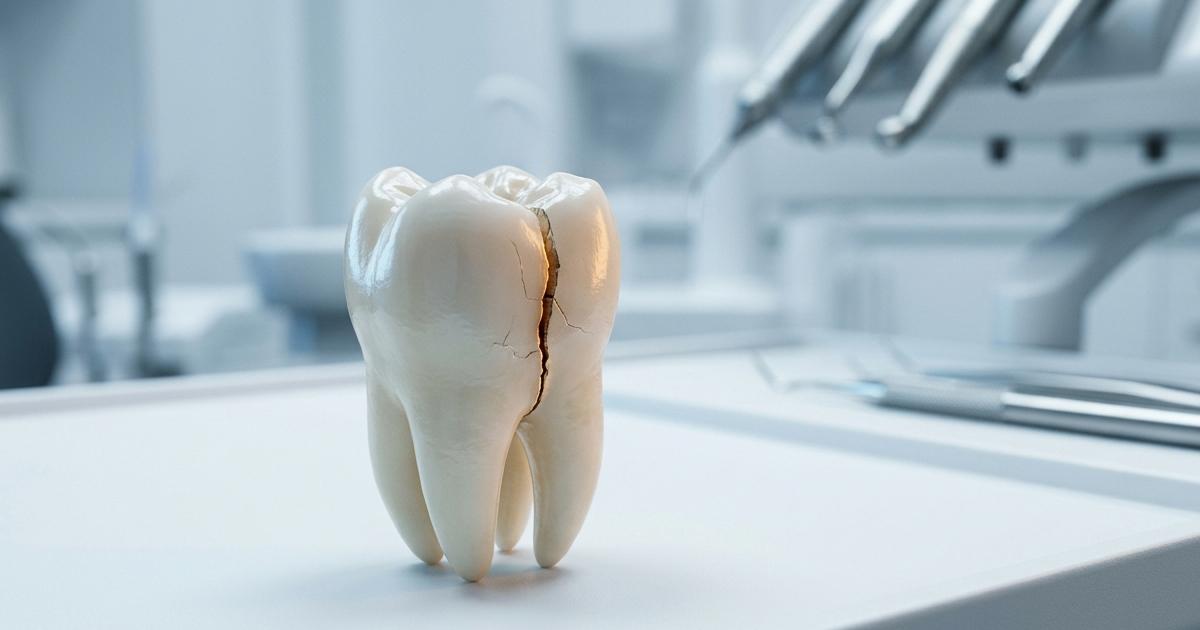

It happens in an instant. You bite down on something unexpectedly hard, take an elbow during a pickup game of beach volleyball, or wake up one morning and notice a small chip along the edge of your tooth. Your first instinct might be to shrug it off — after all, it does not hurt, and the chip is barely noticeable. But here in Southwest Florida, where our active lifestyles and warm-weather diets put our smiles to the test year-round, ignoring a cracked or chipped tooth can quietly set the stage for a serious dental problem.
At 1 OAK Dentistry, Dr. Marc Dadkhah and Dr. Andrea Hernandez see patients regularly who waited weeks or even months before addressing what seemed like a minor crack — only to discover that the damage had progressed far deeper than expected. Understanding why these injuries matter, and what to do about them promptly, can save you from significant discomfort and expense down the road.
Why a Cracked or Chipped Tooth Is Never Just Cosmetic
Many people assume that a chip or crack is purely an aesthetic issue. And while a damaged tooth can certainly affect the appearance of your smile, the real danger lies beneath the surface. Your teeth are composed of multiple layers: the hard outer enamel, the softer dentin beneath it, and the innermost pulp chamber, which contains nerves and blood vessels. When a crack or chip compromises the enamel, it can expose the dentin and, in more serious cases, the pulp itself.
Once the inner structures of a tooth are exposed, the risk of bacterial invasion increases dramatically. Bacteria thrive in the warm, moist environment of your mouth, and an unprotected crack gives them a direct pathway into the tooth. Over time, this can lead to infection, abscess, and the kind of deep-seated pain that sends patients to an emergency dental appointment.
Types of Cracks and What They Mean for Your Oral Health
Not all cracks are created equal. Understanding the type of damage you are dealing with helps clarify the urgency of treatment and the range of options available to you.
- Craze lines: Superficial cracks that affect only the outer enamel. These are typically harmless and purely cosmetic but should still be monitored.
- Fractured cusp: A piece of the chewing surface of the tooth breaks off. This often occurs around a filling and may or may not cause pain, but it requires prompt attention.
- Cracked tooth: A crack that extends from the chewing surface downward toward the root. If caught early, the tooth can often be saved. If the crack reaches the pulp, root canal therapy may be necessary.
- Split tooth: A crack that has progressed to the point where the tooth separates into distinct segments. Treatment options are limited, and extraction may be required.
- Vertical root fracture: A crack that begins at the root and moves upward. These are particularly difficult to detect and are often only discovered when surrounding bone and gum tissue begin to show signs of infection.
As you can see, the earlier a crack or chip is identified and treated, the better the outcome. Time is genuinely a factor here, and what seems minor today can escalate quickly without intervention.
The Symptoms You Should Never Dismiss
One of the most frustrating aspects of a cracked tooth is that it does not always announce itself with obvious, constant pain. Many patients experience intermittent discomfort that comes and goes, making it easy to rationalize waiting. However, there are specific symptoms that should prompt you to call your dentist as soon as possible.
Warning Signs That Demand Attention
If you notice any of the following, it is time to schedule an evaluation right away:
- A sharp, sudden pain when biting down or releasing pressure on a tooth
- Sensitivity to hot or cold temperatures that lingers longer than a few seconds
- Swelling or tenderness in the gum tissue near a specific tooth
- A persistent dull ache in a tooth or the surrounding jaw
- Visible damage to the tooth surface, even if it seems small
- A feeling that something is catching on your tongue when you run it along your teeth
It is also worth noting that some cracked teeth cause no pain at all until the crack has progressed significantly. This is especially true of vertical root fractures, which can remain entirely asymptomatic for extended periods. This is one of the strongest arguments for maintaining regular dental checkups — at 1 OAK Dentistry, our team uses advanced imaging technology that can detect early structural damage before it becomes a major problem.
What Happens If You Wait Too Long
Delaying treatment for a cracked or chipped tooth is a gamble with significant consequences. The longer a crack remains untreated, the deeper it can travel. Bacteria that enter through even a hairline fracture can begin colonizing the inner pulp of the tooth, leading to pulpitis — an inflammation of the pulp tissue that causes intense, often throbbing pain.
Left untreated further, pulp infection can develop into a periapical abscess, a pocket of pus that forms at the root tip. Dental abscesses are not only extremely painful but also potentially dangerous. In rare but serious cases, the infection can spread to the jaw, neck, or even the brain. While such extreme outcomes are uncommon, they underscore the importance of treating what seems like a minor dental injury with appropriate urgency.
The Financial Consequences of Waiting
Beyond the health risks, there is a straightforward financial argument for early treatment. A small chip caught early might be addressed with simple dental bonding or a porcelain veneer — relatively quick and affordable procedures. A cracked tooth that has reached the pulp will require root canal therapy followed by a crown. A tooth that has split or become abscessed may need to be extracted entirely, followed by implant placement or a bridge to restore function and appearance. Each stage of delay adds layers of complexity and cost to what could have been a simple fix.
Treatment Options at 1 OAK Dentistry
The good news is that modern dentistry offers a wide range of effective solutions for cracked and chipped teeth, and Dr. Marc Dadkhah and the team at 1 OAK Dentistry are experienced in matching the right treatment to the specific nature of each patient's injury.
Dental Bonding
For minor chips that have not compromised the structure of the tooth, dental bonding is often the fastest and most affordable option. A tooth-colored composite resin is applied to the damaged area, shaped to match the natural contour of the tooth, and hardened with a curing light. The entire process typically takes less than an hour and requires no anesthesia.
Porcelain Veneers
For chips that are more visible or affect multiple teeth, porcelain veneers offer a highly aesthetic solution. A thin shell of custom-made porcelain is bonded to the front surface of the tooth, restoring its appearance while also providing a layer of protection. Veneers are a popular choice for patients who want to address damage while simultaneously enhancing the overall look of their smile.
Dental Crowns
When a crack or chip has compromised a significant portion of the tooth's structure, a crown — also called a cap — is often the most appropriate solution. A crown encases the entire visible portion of the tooth, protecting it from further damage and restoring full function. At 1 OAK Dentistry, we use advanced same-day crown technology that allows many patients to receive their permanent restoration in a single visit.
Root Canal Therapy
When a crack has extended into the pulp of the tooth, root canal therapy becomes necessary to remove infected or inflamed tissue, clean and seal the canals, and save the tooth from extraction. Dr. Andrea Hernandez, our board-trained endodontist, brings specialized expertise to this procedure. Root canals have an undeserved reputation for being painful — in reality, the procedure eliminates the source of pain and is performed under local anesthesia with a level of precision and care that most patients find far more comfortable than anticipated.
Prevention: Protecting Your Smile in an Active Florida Lifestyle
While not every crack or chip can be prevented, there are meaningful steps you can take to reduce your risk, especially given the outdoor-oriented, active lifestyle that many Southwest Florida residents enjoy.
- Wear a properly fitted mouthguard during contact sports and recreational activities
- Avoid chewing on hard objects such as ice, hard candies, popcorn kernels, or pen caps
- If you grind your teeth at night, ask your dentist about a custom night guard to protect your enamel
- Address cavities and existing fillings promptly — weakened tooth structure is more susceptible to cracking
- Schedule regular dental checkups so that early signs of structural compromise can be detected and treated before they escalate
Your Next Step Toward a Healthier, Stronger Smile
A cracked or chipped tooth may seem like a minor inconvenience, but the potential consequences of leaving it untreated are anything but minor. At 1 OAK Dentistry in Southwest Florida, Dr. Marc Dadkhah and Dr. Andrea Hernandez are committed to providing the kind of attentive, expert care that catches problems early and delivers lasting solutions. Whether you have noticed a chip you have been putting off addressing or you are experiencing unexplained tooth sensitivity, we encourage you to reach out to our team. Your smile is worth protecting — and the sooner you act, the better your options will be.

