
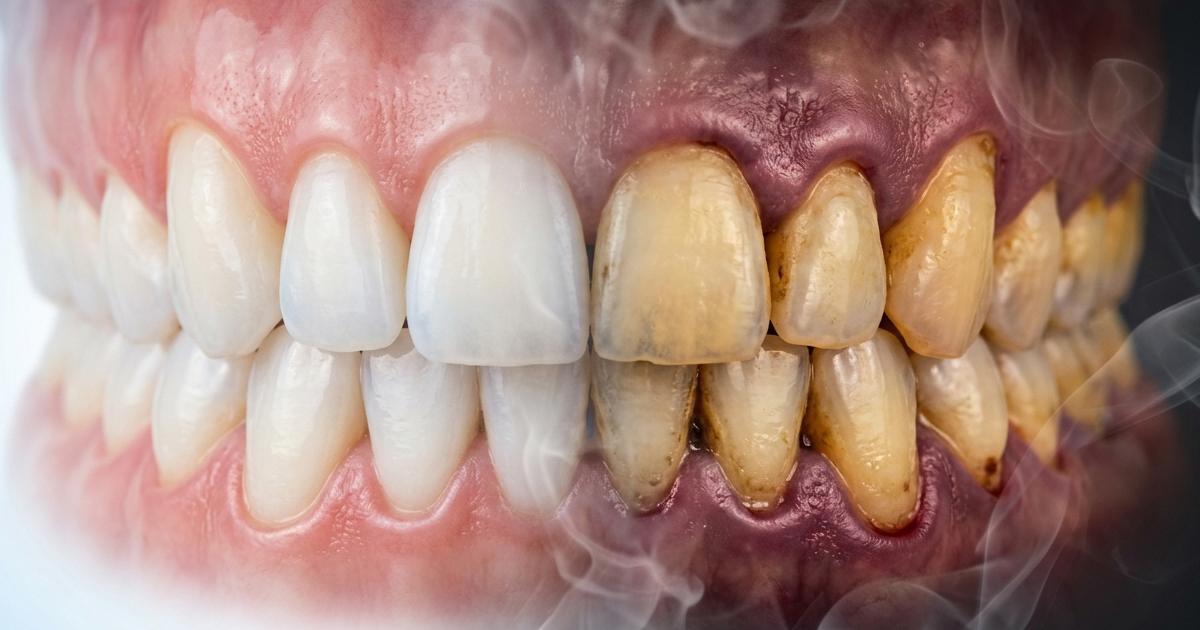

Most people know that smoking is bad for their lungs, but far fewer understand just how profoundly tobacco and nicotine products damage the mouth, teeth, and gums. And with the rise of vaping and e-cigarettes — often marketed as a safer alternative — many Southwest Florida patients are unknowingly trading one set of oral health risks for another. At 1 OAK Dentistry, we believe that informed patients make better choices, so let's take a close and honest look at what smoking and vaping are really doing to your smile.
How Smoking Damages Your Teeth and Gums
Cigarette smoke contains thousands of chemicals, many of which are directly toxic to the tissues inside your mouth. The damage is not just cosmetic — though the aesthetic consequences are significant — it runs deep into the bone, soft tissue, and cellular level of your oral environment.
Staining and Surface Damage
One of the most visible effects of smoking is tooth discoloration. Nicotine and tar are highly pigmented substances that penetrate tooth enamel over time, producing yellow to deep brown staining that is extremely difficult to remove with standard whitening methods. Unlike surface stains from coffee or tea, tobacco stains often require professional intervention and, in some cases, restorative treatment to fully address.
Gum Disease and Bone Loss
Smoking is one of the most significant risk factors for periodontal disease. Tobacco suppresses the immune system's ability to fight bacterial infections in the gums, and it also constricts blood vessels, reducing circulation to the gum tissue. This means that your gums are less able to heal and more vulnerable to the bacterial biofilm that causes gingivitis and, over time, advanced periodontitis.
What makes this especially concerning is that smoking can mask the symptoms of gum disease. Healthy gums bleed when irritated — a warning sign. But because smoking reduces blood flow, smokers' gums may not bleed even when disease is progressing, creating a false sense of security. By the time symptoms become visible, significant bone loss may have already occurred.
Oral Cancer Risk
Tobacco use — including cigarettes, cigars, pipes, and smokeless tobacco — dramatically increases the risk of oral cancer. Oral cancer can develop on the lips, tongue, cheeks, gums, the floor of the mouth, and the roof of the mouth. When detected late, it carries a serious prognosis. Regular dental checkups are essential for early detection, as dentists are trained to identify suspicious tissue changes that may not yet cause pain or discomfort.
Slower Healing After Dental Procedures
Patients who smoke heal significantly more slowly after extractions, implant placements, and periodontal treatments. Smoking compromises blood supply and immune response — two things that are essential for tissue regeneration. It also dramatically increases the risk of dry socket after extractions, a painful condition that occurs when the protective blood clot is disrupted before healing is complete. For patients considering dental implants, smoking substantially increases the risk of implant failure.
The Growing Problem with Vaping
E-cigarettes and vaping devices entered the mainstream as a supposedly cleaner alternative to traditional cigarettes. While they may eliminate tar and combustion byproducts, they are far from harmless — especially when it comes to oral health. Research is still emerging, but what we know so far paints a concerning picture.
Nicotine Without the Smoke Is Still Nicotine
Most vaping products still contain nicotine, which has its own set of oral health consequences independent of tobacco smoke. Nicotine restricts blood flow to the gums, impairs saliva production, and increases the risk of gum disease. It also promotes bacterial growth by altering the oral microbiome — the delicate balance of microorganisms that help protect the mouth from disease.
Aerosol and Gum Tissue Damage
The aerosol produced by e-cigarettes is not simply water vapor. It contains ultrafine particles, volatile organic compounds, and flavoring chemicals — some of which have been shown to damage gum cells and oral epithelial tissue. Studies have found that vaping can trigger inflammation in gum tissue at a cellular level, even in the absence of visible symptoms.
Dry Mouth and Cavity Risk
Vaping has been associated with reduced saliva production, which creates a dry oral environment. Saliva is one of your mouth's most important natural defenses — it neutralizes acid, washes away food particles and bacteria, and remineralizes enamel. When saliva production is reduced, the risk of tooth decay and bacterial overgrowth increases significantly. Many vaping patients report persistent dry mouth, bad breath, and increased cavity frequency without immediately connecting it to their vaping habit.
What You Can Do to Protect Your Smile
Whether you are a current smoker, a vaper, or someone who has recently quit, there are meaningful steps you can take to protect and restore your oral health. The good news is that the mouth is remarkably resilient — with the right care and support, significant improvement is possible.
Prioritize More Frequent Dental Visits
Tobacco and nicotine users should generally not limit themselves to once-a-year cleanings. More frequent professional cleanings — often every three to four months — help control the buildup of plaque and tartar that accumulates more aggressively in a compromised oral environment. They also give your dentist regular opportunities to monitor gum health and screen for early signs of oral cancer.
Be Honest with Your Dental Team
It may feel uncomfortable to disclose your smoking or vaping habits, but your dental team needs this information to provide you with the best possible care. At 1 OAK Dentistry, we create a judgment-free environment where patients can speak openly. This honesty allows us to tailor your treatment plan to your actual risk profile and catch problems earlier.
Consider Comprehensive Gum Treatment
If you have been smoking or vaping for an extended period, a comprehensive periodontal evaluation is an important starting point. Deep cleaning procedures such as scaling and root planing can remove bacterial deposits from below the gum line and allow the tissue to begin healing. In more advanced cases, additional periodontal therapy may be recommended.
Steps Every Tobacco and Nicotine User Should Take
- Schedule a full periodontal evaluation if you have not had one recently
- Brush twice daily with a fluoride toothpaste and floss every day without exception
- Stay well hydrated to counteract dry mouth and support saliva production
- Use alcohol-free mouthwash to reduce bacteria without further drying oral tissues
- Ask your dentist about oral cancer screenings at every visit
- Talk to your physician about cessation support — quitting is the single most effective thing you can do for your oral and overall health
- If you are considering dental implants or other restorative work, discuss your tobacco use with your dentist before beginning treatment
The 1 OAK Dentistry Approach to Tobacco-Related Oral Health
At 1 OAK Dentistry, Dr. Marc Dadkhah and Dr. Andrea Hernandez bring a high level of clinical expertise to every patient interaction. Dr. Hernandez's specialized training in endodontics means that when infections or damage reach the inner tooth structures — as they more commonly do in tobacco users — she is equipped to provide the most advanced, conservative treatment possible. Dr. Dadkhah's extensive research background and residency training at Albert Einstein Medical Center inform a comprehensive approach to diagnosis and care that looks beyond surface symptoms to underlying causes.
We understand that habits like smoking and vaping are deeply personal and often tied to stress, routine, and dependency. Our goal is never to lecture — it is to partner with you in building the best oral health possible given where you are today. Whether you are actively working to quit or simply want to minimize the damage while you continue your journey, we are here to help.
If you are a smoker or vaper in Southwest Florida who has been putting off a dental visit, now is the time to schedule. The sooner we can assess your current oral health, the more options we have to protect your smile, catch problems early, and support your long-term wellbeing. Your mouth is the gateway to your health — and it deserves the same careful attention you give to the rest of your body.

