
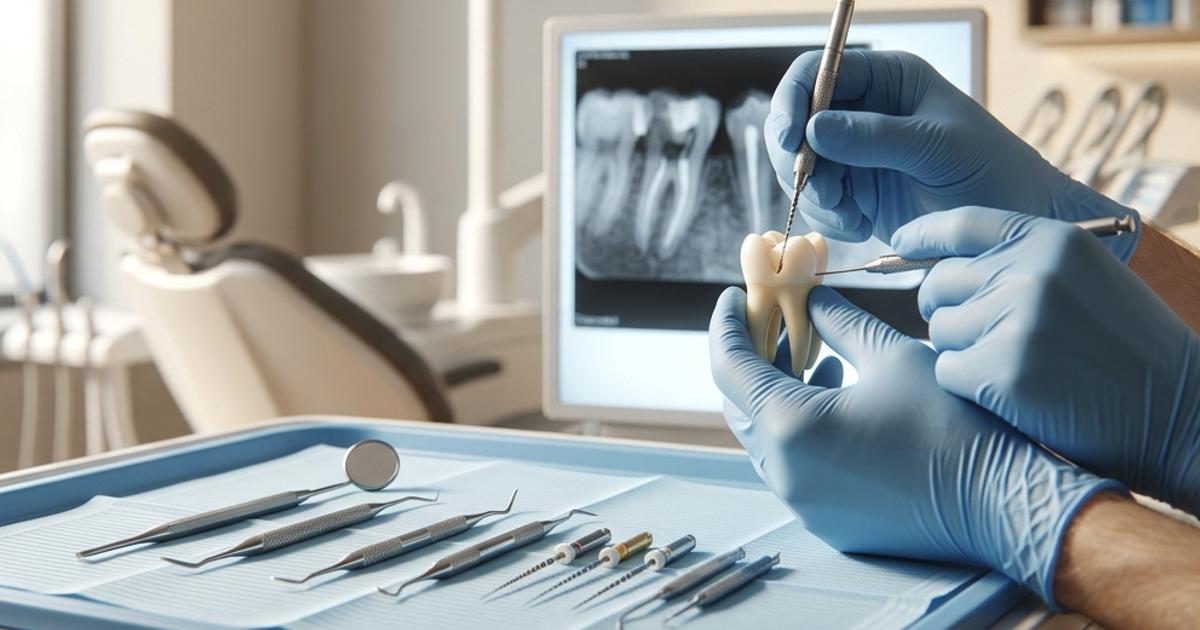

When your dentist mentions a referral to an endodontist, it is natural to have questions. What exactly does an endodontist do? Is the situation serious? Will it hurt? At 1 OAK Dentistry in Southwest Florida, we believe that an informed patient is a confident patient. That is why we want to take a moment to explain what endodontics is, what makes an endodontist uniquely qualified, and how knowing when to see one can make all the difference for your long-term oral health.
What Is an Endodontist?
An endodontist is a dental specialist who focuses specifically on diagnosing and treating conditions that affect the inner structures of the tooth — most importantly, the dental pulp and the tissues surrounding the roots. The word endodontics comes from the Greek words for inside and tooth, which perfectly describes the scope of this specialty.
All endodontists are dentists, but not all dentists are endodontists. After completing dental school, an endodontist goes on to complete an additional two to three years of advanced specialty training focused exclusively on root canal procedures, endodontic surgery, treatment of dental trauma, and the management of complex tooth pain. This focused expertise means they have seen and treated thousands of cases involving the internal anatomy of teeth.
Meet Dr. Andrea Hernandez at 1 OAK Dentistry
At 1 OAK Dentistry, patients have the unique advantage of accessing specialist-level endodontic care right within our practice. Dr. Andrea Hernandez completed her endodontics residency at the University of Texas Health Science Center and has received multiple research awards for her work in the field. Her combination of clinical excellence and academic distinction means that when your tooth requires advanced care, you are in exceptionally capable hands — without ever having to leave the comfort of our office.
What Does an Endodontist Actually Treat?
Endodontists are most commonly associated with root canal therapy, but their scope of practice goes well beyond that single procedure. Understanding the range of conditions they treat can help you recognize when a referral or consultation might be appropriate for you.
Root Canal Therapy
Root canal treatment is the most well-known endodontic procedure. It is performed when the pulp — the soft tissue inside the tooth containing nerves and blood vessels — becomes inflamed or infected. Rather than extracting the tooth, a root canal allows the dentist to save it by carefully removing the damaged pulp, cleaning and shaping the root canals, and sealing the tooth to prevent future infection. Despite its reputation, modern root canal therapy performed by a skilled endodontist is a remarkably comfortable procedure.
Endodontic Retreatment
Occasionally, a tooth that has already undergone a root canal does not heal properly or develops new problems. In these cases, endodontic retreatment may be recommended. The endodontist reopens the tooth, removes the previous filling material, carefully cleans the canals again, and reseals the tooth. This gives the tooth a second chance at survival and long-term function.
Endodontic Surgery (Apicoectomy)
When a standard root canal or retreatment is not sufficient to resolve infection near the root tip, a minor surgical procedure known as an apicoectomy may be performed. The endodontist accesses the area through the gum tissue, removes the infected tissue and the very tip of the root, and places a small filling to seal the canal. It is a precise, targeted procedure that can save a tooth that might otherwise need to be extracted.
Treatment of Dental Trauma
Injuries to the teeth — whether from sports, accidents, or unexpected impacts — often require endodontic evaluation. A tooth that has been cracked, displaced, or knocked out may need immediate endodontic attention to maximize the chances of saving it. Endodontists are specifically trained to manage these traumatic injuries with urgency and precision.
Diagnosis of Chronic or Complex Tooth Pain
Tooth pain is not always straightforward. Sometimes a patient experiences persistent, unexplained pain that is difficult to trace to a specific tooth. Endodontists are highly skilled diagnosticians. They use advanced imaging and testing techniques to locate the source of pain — even when it is not immediately obvious — and to differentiate between dental and non-dental causes.
Signs You Should See an Endodontist
You do not always need to wait for a referral to think about whether endodontic care might be right for you. Being aware of the warning signs means you can seek help sooner, which almost always leads to better outcomes and often less extensive treatment.
- Persistent or severe toothache — especially pain that is deep, throbbing, or difficult to pinpoint
- Prolonged sensitivity to heat or cold — sensitivity that lingers long after the temperature stimulus is removed may indicate pulp damage
- Darkening or discoloration of a tooth — a tooth that has changed color may have a compromised nerve or pulp
- Swelling or tenderness in the gums — particularly a pimple-like bump on the gums near the root of a tooth, which may indicate an abscess
- Pain when biting or chewing — consistent discomfort during normal chewing activity can signal a problem inside the tooth
- A chipped, cracked, or broken tooth — especially if the damage extends toward the root or causes symptoms
- Previous root canal with recurring symptoms — pain or swelling returning in a previously treated tooth warrants re-evaluation
- Facial swelling — swelling around the jaw, cheek, or neck associated with tooth pain should be evaluated promptly
If you are experiencing any of these symptoms, do not wait. Early intervention by an endodontist can often save a tooth that might otherwise require extraction, and it can prevent the spread of infection to surrounding tissues.
The Advantage of Having an Endodontist In-House
One of the distinct advantages of choosing 1 OAK Dentistry is that you do not have to navigate a referral to an outside specialist and manage care across multiple offices. Having Dr. Hernandez as an integral part of our team means that your general dentist and your endodontist are in constant communication about your treatment. Your records, imaging, and treatment history are all in one place, and your care is seamlessly coordinated from diagnosis through completion.
This model of integrated specialty care reflects our broader philosophy at 1 OAK Dentistry: providing the highest quality, most comprehensive dental experience possible under one roof in Southwest Florida. Whether your needs are general, cosmetic, restorative, or specialty-level, our team is equipped to meet them with precision and compassion.
Do Not Wait Until the Pain Becomes Unbearable
One of the most important things we can share with patients is this: dental pain rarely resolves on its own, and delaying care almost always makes treatment more complex and costly. An infected tooth does not get better without professional intervention. What might be a straightforward root canal today can become an extraction — and the need for an implant or bridge — if left untreated for too long.
If you have been experiencing any of the symptoms described above, or if your general dentist has recommended a consultation with an endodontist, we encourage you to reach out to 1 OAK Dentistry. Dr. Hernandez and our entire team are here to provide you with the expert care, clear communication, and genuine compassion you deserve. Your tooth — and your overall health — are worth protecting.

