
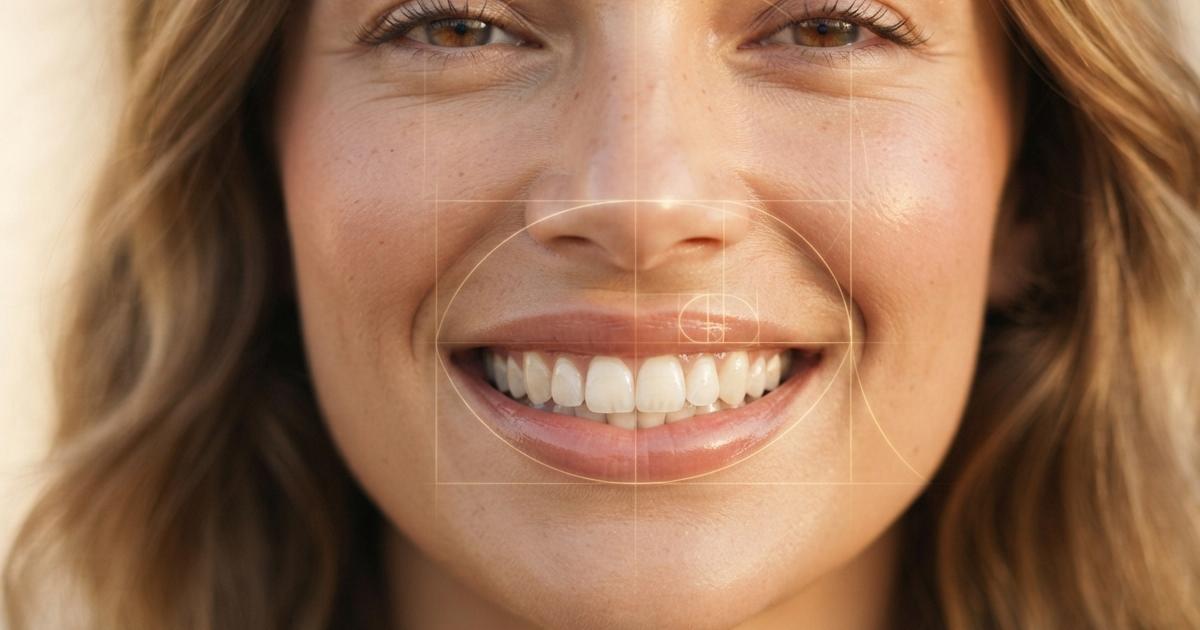

When you look at someone and think, "they have a beautiful smile," what exactly are you responding to? Most people assume it comes down to white teeth or straight teeth — but the science behind a truly stunning smile is far more nuanced. At 1 OAK Dentistry, Dr. Marc Dadkhah and our team approach cosmetic care with both artistic sensibility and clinical precision, understanding that a great smile is the result of color, shape, proportion, and symmetry working together in harmony. Whether you are considering a full smile makeover or simply curious about what makes a smile attractive, understanding these principles can help you make more informed decisions about your own dental care.
The Role of Color in a Beautiful Smile
Tooth color is often the first thing people notice, and it is one of the most emotionally powerful components of a smile. But the ideal shade is not necessarily the brightest white possible. In fact, teeth that are too white can look artificial and draw attention in the wrong way. The goal in cosmetic dentistry is to find a shade that is bright enough to appear healthy and vibrant, while still complementing your skin tone, hair color, and the whites of your eyes.
Understanding Natural Tooth Shading
Natural teeth have a subtle gradient — they tend to be slightly lighter near the incisal edges (the biting tips) and warmer near the gumline. They also have a degree of translucency, particularly in younger teeth, which gives them a lifelike depth that purely opaque restorations can sometimes lack. This is why experienced cosmetic dentists like Dr. Marc spend considerable time selecting the right ceramic materials and shades when crafting veneers or crowns. A restoration that mimics this natural depth looks far more realistic than one that is simply flat and white.
How Whitening Fits Into the Picture
Professional teeth whitening is a powerful tool for improving smile aesthetics, but it works best when used as part of a thoughtful overall plan. Whitening affects natural tooth enamel, but it does not change the color of crowns, veneers, or composite bonding. This means that if you are planning restorative work, the sequence of treatment matters. In most cases, we recommend whitening first, then matching any restorations to your new, lighter shade. Our team can guide you through this process to ensure a cohesive, natural-looking result.
Shape, Proportion, and the Golden Ratio
Beyond color, the shape of your teeth plays a defining role in the overall appearance of your smile. Each tooth has a distinct form, and the proportional relationship between teeth is governed by principles that cosmetic dentists have studied and refined over decades — some of which trace back to classical geometry.
The Golden Proportion in Dentistry
The golden proportion is a mathematical ratio — approximately 1.618 to 1 — that appears repeatedly in nature and has long been associated with beauty and visual harmony. In dentistry, this principle is applied to the relative widths of the front teeth as seen from the front. Ideally, as you move from the center of the smile outward, each tooth appears to be a specific fraction of the width of the one before it. When this proportion is achieved — even approximately — the smile reads as balanced and pleasing to the eye.
Tooth Shape and Personality
The contour of individual teeth also contributes to the overall character of a smile. Broadly speaking:
- Rounded, softer edges tend to create a more youthful and feminine appearance.
- Squared, more defined edges project strength and a more masculine aesthetic.
- Slightly tapered forms can create an elegant, refined look.
- Worn or flattened teeth often age the appearance of the face and can be rejuvenated with veneers or bonding.
At 1 OAK Dentistry, we use digital smile design tools to preview proposed changes before any treatment begins. This allows you to see how different shapes and proportions will look on your specific face, and to collaborate with Dr. Marc on the final design. The goal is always a smile that feels authentically yours — not a generic template applied to your mouth.
Symmetry, Balance, and the Bigger Picture
The third pillar of smile design is the relationship between the teeth and the surrounding facial structures. A smile does not exist in isolation — it interacts with your lips, your gumline, the midline of your face, and even the tilt of your head. Cosmetic dentistry at the highest level accounts for all of these variables.
The Gumline Matters More Than You Think
One of the most overlooked elements of smile aesthetics is the gumline. Ideally, the gum tissue frames the teeth evenly, with a smooth arc that follows the natural curve of the upper lip. When the gumline is uneven — with some teeth showing more gum tissue than others — it can disrupt the visual harmony of the smile even when the teeth themselves are beautiful. This is why procedures like gum contouring, which gently reshapes the soft tissue to create a more even frame, can be so transformative. Similarly, a gummy smile — one where an excess of gum tissue is visible above the upper teeth when smiling — can be corrected to reveal more of the tooth structure beneath.
Midline Alignment and Facial Symmetry
The dental midline — the vertical line between the two front teeth — should ideally align with the midline of the face and the center of the upper lip. When it is significantly off, even subtle misalignments can create a sense of imbalance that the eye perceives but the brain may not consciously identify. Correcting midline discrepancies can be achieved through orthodontic treatment, veneers, or a combination of approaches, depending on the underlying cause.
The Smile Arc
The smile arc refers to the curve created by the edges of the upper front teeth when you smile. In an aesthetically pleasing smile, this curve mirrors the curvature of the lower lip. When the smile arc is flat or reversed — a common result of heavy tooth wear or certain orthodontic treatments — the smile can appear older or less dynamic. Restoring a natural, upward-curving smile arc is one of the more subtle but powerful changes a skilled cosmetic dentist can make.
Putting It All Together: Your Personalized Smile Design
Understanding the science behind a perfect smile is empowering — but translating that science into a real-world outcome requires both technical skill and genuine artistry. At 1 OAK Dentistry, Dr. Marc Dadkhah brings both. With extensive academic training, published research, and a deep commitment to individualized care, he approaches every cosmetic case as a collaboration between patient and clinician.
There is no single template for a beautiful smile. Your ideal result depends on the unique geometry of your face, your natural tooth structure, your personal preferences, and the health of your underlying teeth and gums. What we can promise is a thorough evaluation, honest guidance, and a treatment plan designed specifically for you — not a one-size-fits-all approach.
If you are curious about what your smile could look like, we invite you to schedule a cosmetic consultation at our Southwest Florida practice. Whether your goals are subtle or transformative, we would love to help you understand what is possible and take the first step toward the smile you have always envisioned.

